
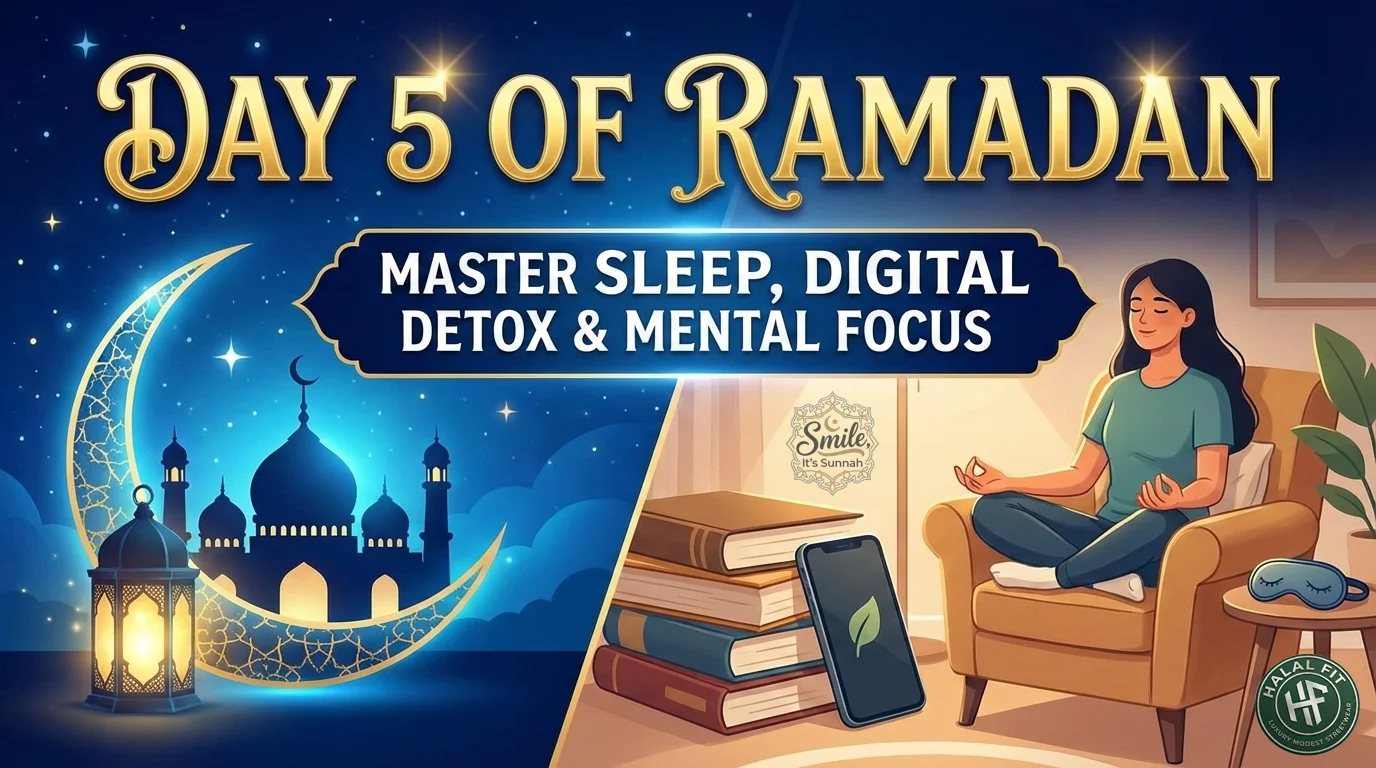
Digital Wellness, Mental Clarity, and Mastering the "Nocturnal" Sleep Schedule
Date: February 22, 2026
DAY 5 OF RAMADAN 2026
Category: Lifestyle / Wellness & Performance
Alhamdulillah, we have reached Day 5 of Ramadan 2026! By now, the initial adrenaline of the first few days is settling, and your body is starting to truly adapt to the beautiful, yet physically demanding, rhythms of the Holy Month. As we move deeper into the First Ashra (Days of Mercy), the focus shifts from physical survival to mental and spiritual optimization.
As we look at the lifestyle shifts happening across Canada and globally this year, a few major trends are standing out. Experts are calling Ramadan 2026 the year of the "nocturnal revival"—a massive shift where our active hours compress during the day and extend late into the night. With late-night Taraweeh prayers, Suhoor prep, and late-evening socializing, mastering your off-hours is just as important as how you fast.
Today, we are stepping away from standard overarching nutrition or workplace productivity to focus on three highly-searched, crucial elements for your well-being right now: Digital Wellness, Mental Clarity, and Sleep Optimization.
1. Embracing the "Nocturnal Revival": How to Optimize Your Ramadan Sleep
With shorter daytime routines and the bulk of our eating, praying, and family time happening after sunset, it's easy to become sleep-deprived. According to health experts at Arabian Business, obtaining between seven to nine hours of sleep is essential to maintain focus and reduce fatigue during the fast [5]. The key isn't necessarily getting 8 uninterrupted hours—it's about mastering polyphasic sleep (sleeping in chunks).
•The Post-Taraweeh Window: Try to get to bed as soon as you return from Taraweeh. Even a solid 3 to 4 hours here provides crucial deep sleep.
•The Post-Suhoor Nap: After Fajr, aim for another 2 to 3 hours of rest. Muslim Pro suggests "sleep hacking" your schedule to ensure you wake up energized for worship rather than drained [10].
•Manage Late-Night Screen Time: Search trends show a massive spike in mobile usage between 12 AM and 3 AM. However, Johns Hopkins Aramco Healthcare (JHAH) warns that blue light destroys melatonin production, which is vital for quality rest [4].
2. Digital Wellness: The 2026 Ramadan "Digital Detox" Trend
One of the most significant trends for Ramadan 2026 is the rise of the "Digital Detox." As we spend more time awake at night, the temptation to "doomscroll" is at an all-time high. The National News highlights that Ramadan is the perfect time to transition from digital distraction to spiritual discipline [2].
|
Strategy
|
Benefit
|
Implementation
|
|
App Limits
|
Reduces cognitive load
|
Set a 30-minute daily limit on social media apps.
|
|
Phone-Free Iftar
|
Enhances community connection
|
Place all phones in a basket during family meals.
|
|
Digital Dhikr
|
Replaces scrolling with worship
|
Use wellness tech or apps specifically for remembrance [11].
|
By reducing non-essential screen time, you protect your "cognitive capital," allowing for deeper reflection and better mental health. A 2025 systematic review published in Springer Link confirms that fasting, when combined with intentional spiritual practice, significantly reduces stress and anxiety [9].
3. Mental Clarity: The Science of Fasting and Focus
Many Canadian Muslims report feeling a "second wind" of mental sharpness by Day 5. This isn't just spiritual; it's biological. UC Riverside researchers note that mild ketosis during fasting can actually improve alertness and cognitive performance [3].
To maintain this mental clarity throughout the day:
•Strategic Hydration: The World Health Organization (WHO) emphasizes drinking water regularly during non-fasting hours and avoiding sweetened drinks to prevent the "sugar crash" that leads to brain fog [1].
•Wellness Tech: In 2026, many are using wellness trackers to monitor their Heart Rate Variability (HRV) and adjust their activity levels accordingly [13].
•Mindful Movement: Khaleej Times recommends light exercise, such as evening walks after Iftar, to boost circulation and maintain emotional balance [7].
4. Fasting-Friendly Skincare and Cellular Hydration
By Day 5, the dry Canadian winter air combined with fasting can lead to "Ramadan skin"—dullness and dehydration. Trending searches for "Ramadan skincare 2026" show a move toward water-based, hyaluronic acid treatments.
•Internal Hydration: Don't just chug water; use electrolytes. News18 notes that proper hydration supports brain function and emotional stability [8].
•External Protection: Use hydrating facial mists during the mid-afternoon slump to refresh your skin and senses without breaking your fast.
Final Thoughts for Day 5
As you move through today, remember that taking care of your physical vessel—your mind, your sleep, and your digital habits—is a form of gratitude to Allah (SWT). By mastering the nocturnal revival and embracing digital wellness, you are setting the stage for a transformative Ramadan.
Stay tuned for tomorrow as we continue our 30-Day Ramadan 2026 series, bringing you the best strategies to make this your healthiest, most fulfilling month yet.
References & Sources


Ramadan FAQ: Mastering Digital Wellness, Mental Clarity, and Sleep in Ramadan 2026
This FAQ addresses the top 20 questions trending across Google, Reddit, and professional networks regarding the "nocturnal revival," digital detoxing, and cognitive performance during the 2026 Ramadan season.
1. What is the "Nocturnal Revival" in Ramadan 2026?
The "nocturnal revival" refers to the shift in active hours during the 2026 winter Ramadan in Canada. Because Iftar is earlier, many Muslims are staying awake later into the night for Taraweeh, socializing, and Suhoor prep, effectively shifting their "day" to the night hours.
2. How can I fix my sleep schedule if I have to work a 9-5?
The most effective strategy is polyphasic sleep. Aim for a 4-hour block after Taraweeh and a 2-3 hour "power nap" after Suhoor/Fajr. This ensures you get enough REM and deep sleep to function during work hours.
3. Is it better to stay awake from Suhoor until work starts?
While tempting, staying awake can lead to a massive energy crash by 2 PM. If possible, a 90-minute sleep cycle after Fajr is scientifically proven to be more beneficial for cognitive clarity than pushing through.
4. Why do I feel more "brain fog" on Day 5 than on Day 1?
By Day 5, your body’s initial adrenaline has worn off, and you may be experiencing the cumulative effects of sleep deprivation. This is the "adjustment phase" where your metabolism is switching to fat-burning (ketosis).
5. Can a "Digital Detox" actually improve my fasting experience?
Yes. Reducing screen time lowers "cognitive noise" and dopamine spikes, making it easier to focus on spiritual reflection and reducing the irritability often associated with fasting.
6. How do I stop "doomscrolling" during the late-night hours?
Set a "Digital Curfew" 30 minutes before your planned sleep blocks. Use "Grayscale mode" on your phone to make apps less visually stimulating, and replace scrolling with a physical book or journaling.
7. What are the best wellness tech gadgets for Ramadan 2026?
Smart rings (like Oura) and watches are trending this year for monitoring Heart Rate Variability (HRV) and sleep quality. Smart water bottles that track hydration between Iftar and Suhoor are also highly popular.
8. Does blue light affect my fast?
While it doesn't break your fast, blue light suppresses melatonin, making it harder to fall asleep during your short sleep windows. This leads to higher cortisol levels, which can increase hunger and stress the next day.
9. How can I maintain mental clarity for exams or high-stakes meetings?
Leverage the "Post-Suhoor Golden Window." Your brain is most alert 1-3 hours after eating. Schedule your most difficult tasks for this period rather than the late afternoon.
10. Is it okay to sleep all day if I’m not working?
While permissible, excessive sleep can lead to lethargy. The Sunnah encourages a balance. A midday "Qailulah" (short nap) is recommended, but staying active helps maintain metabolic health.
11. How do I handle "Ramadan Headaches" on Day 5?
These are often caused by caffeine withdrawal or dehydration. Ensure you are using electrolytes in your Suhoor water and consider a very small amount of caffeine at Suhoor to taper off gradually.
12. Can I use social media for "Dawah" or spiritual growth?
Yes, but be intentional. Follow accounts that provide value and set a timer. The goal of a digital detox isn't total isolation, but digital intentionality.
13. What is the best way to stay hydrated in the Canadian winter?
Winter air is dry. Use a humidifier in your room and focus on "eating your water" through hydrating foods like cucumbers and watermelon at Suhoor, which release moisture slowly.
14. Why is my skin breaking out during Ramadan?
"Ramadan skin" is often due to the shift in sleep and the sudden change in eating habits. Focus on water-based moisturizers and avoid heavy, fried foods at Iftar which can trigger inflammation.
15. How does fasting affect my mood and emotional balance?
Fasting can initially cause "hangry" feelings due to blood sugar fluctuations. However, by Day 5, many report a "calming effect" as the body adapts. Deep breathing and Dhikr are proven to stabilize the nervous system.
16. Should I exercise before or after Iftar for mental health?
For mental clarity, a light 15-minute walk before Iftar is excellent. For physical gains, wait until after Iftar when you are hydrated.
17. What are "Digital Dhikr" apps?
These are apps designed to help you keep track of your supplications and Quran reading. They are a great way to use your phone for spiritual growth rather than mindless scrolling.
18. How do I manage family social pressure and my sleep schedule?
Communicate your "sleep blocks" to your family. It’s okay to leave a gathering early to ensure you can wake up for Suhoor and perform your best the next day.
19. Can I use "Night Mode" on my devices to help with sleep?
Yes, but it’s not a total fix. While it reduces blue light, the content you consume still keeps your brain active. A total screen break is always superior.
20. What is the most important tip for Day 5?
Be kind to yourself. Your body is doing incredible work. If you feel tired, rest. If you feel distracted, refocus. Ramadan is a marathon of the heart, not just a test of the body.