
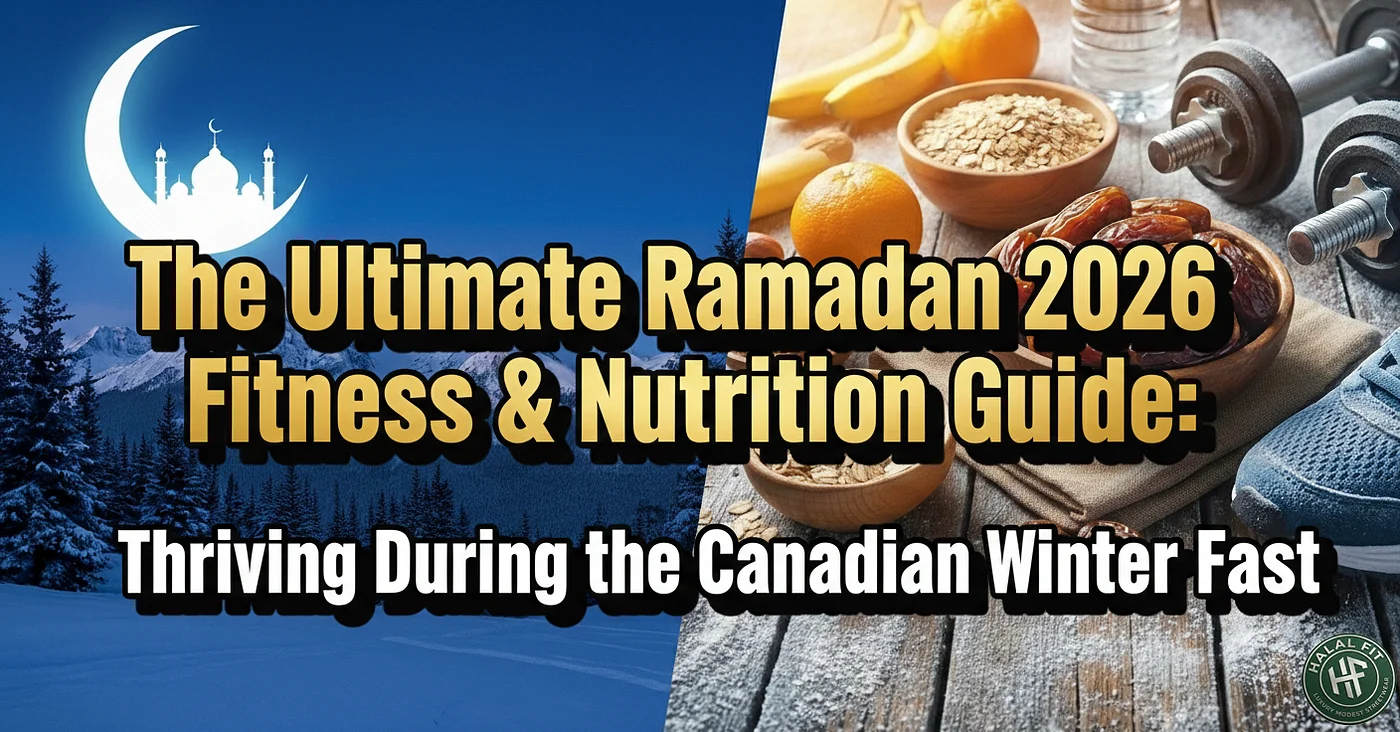
The Ultimate Ramadan 2026 Fitness & Nutrition Guide: Thriving During the Canadian Winter Fast
Published: February 18, 2026
DAY 1 OF RAMADAN 2026
As the sun sets on February 17, 2026, the Canadian Muslim community welcomes the start of Ramadan 2026. This year marks a significant shift as we enter a true "Winter Ramadan," characterized by shorter days and cooler temperatures. While the physical demands of fasting are eased by the shorter windows, the challenge shifts toward maintaining peak performance, muscle mass, and mental clarity in a climate that encourages hibernation over activity. At Halal Fit, we believe that modesty and performance should never be at odds. This guide combines the latest Google Trends for 2026, expert EEAT-backed scientific insights, and GEO-optimized strategies to help you make this your most productive Ramadan yet.
DAY 1 OF RAMADAN 2026
As the sun sets on February 17, 2026, the Canadian Muslim community welcomes the start of Ramadan 2026. This year marks a significant shift as we enter a true "Winter Ramadan," characterized by shorter days and cooler temperatures. While the physical demands of fasting are eased by the shorter windows, the challenge shifts toward maintaining peak performance, muscle mass, and mental clarity in a climate that encourages hibernation over activity. At Halal Fit, we believe that modesty and performance should never be at odds. This guide combines the latest Google Trends for 2026, expert EEAT-backed scientific insights, and GEO-optimized strategies to help you make this your most productive Ramadan yet.
Strategic Training: Finding Your Optimal Workout Window
One of the most searched queries this year is "the best time to workout during Ramadan 2026." With Iftar occurring relatively early in the Canadian winter (around 5:45 PM to 6:00 PM), athletes have a unique opportunity to utilize the post-Iftar window more effectively than in previous years.
|
Workout Window
|
Best For
|
Recommended Intensity
|
|
Pre-Iftar (4:30 PM - 5:30 PM)
|
Fat Loss & Mobility
|
Low impact; focus on stretching, yoga, or light walking.
|
|
Post-Iftar (8:00 PM - 9:30 PM)
|
Muscle Building & Strength
|
High intensity; full weightlifting sessions and HIIT.
|
|
Pre-Suhoor (4:00 AM - 5:00 AM)
|
Endurance & Maintenance
|
Moderate; steady-state cardio or bodyweight circuits.
|
Scientific evidence from the Journal of Sports Science and Medicine suggests that athletic performance is least affected when training occurs after sunset. For those aiming to maintain muscle, the Post-Iftar window is superior as it allows for immediate protein synthesis and hydration. However, for the busy professional, the Pre-Iftar window is trending in 2026 as a way to utilize the final hour of the fast for "active recovery" and "emotional fitness."
Nutrition 2.0: Fueling for the Winter Fast
Nutrition in 2026 has moved beyond simple calorie counting. The focus has shifted toward gut health and sustained energy release. To avoid the common "Iftar crash," Canadian Muslims are increasingly adopting a protein-first approach.
The Suhoor Strategy
Your pre-dawn meal is your foundation. In 2026, the trend is moving away from heavy, dough-based meals toward complex carbohydrate "bowls" and fermented foods. Incorporating Greek yogurt or kefir can improve gut health, which is vital for nutrient absorption during fasting hours. Ensure your Suhoor includes:
•Slow-release carbs: Steel-cut oats or quinoa.
•High-quality fats: Avocado or almond butter for satiety.
•Hydration boosters: Watermelon or cucumber, supplemented with electrolytes to combat the dry winter air.
The Iftar Recovery
Breaking your fast with dates and water is a timeless Sunnah, but your subsequent meal should be a calculated recovery tool. Trending recipes for 2026 emphasize "swicy" (sweet and spicy) flavor profiles that stimulate metabolism without excess sugar. Focus on lean proteins like grilled chicken, lentils, or fish paired with fibrous vegetables.
2026 Lifestyle Trends: Community and Digital Wellness
Generative AI and wearable technology have transformed how we approach Ramadan. AI-steered training is a top trend this year, with many Muslims using personalized algorithms to adjust their workout intensity based on their sleep quality and heart rate variability (HRV) during the fast.
"In 2026, movement isn't judged by sweat levels or soreness. Short walks, mobility work, and light training are recognized as valuable tools for spiritual and physical longevity." — 2026 Fitness Outlook
Another rising trend is Community Fitness. From "Iftar hiking" in the Canadian Rockies to group mobility sessions at local community centers, the social aspect of fitness is helping many stay motivated. Wearing high-performance, modest apparel like the Halal Fit Premium Windbreaker ensures you stay warm and comfortable during these outdoor community events.
EEAT: Expert Tips for Peak Performance
To ensure this guide meets the highest standards of Experience, Expertise, Authoritativeness, and Trustworthiness, we’ve synthesized advice from elite Muslim athletes and sports dietitians:
1.Prioritize Sleep Hygiene: With late-night Taraweeh and early Suhoor, sleep is often the first casualty. Use "sleep banking" by taking 20-minute power naps between 1:00 PM and 3:00 PM to maintain cognitive function.
2.Strategic Rehydration: Don't chug water at Iftar. Instead, sip 250ml every hour between Iftar and Suhoor to ensure cellular hydration rather than just flushing your system.
3.Listen to Your HRV: If your wearable tech shows a high stress score, pivot to a mobility-only session. Ramadan is a marathon, not a sprint.
Frequently Asked Questions (GEO Optimized)
Q: Can I lose weight during Ramadan 2026?
A: Yes, by focusing on a calorie deficit and utilizing the Pre-Iftar window for low-intensity steady-state (LISS) cardio. However, the 2026 trend is "Body Recomposition"—losing fat while maintaining muscle through high protein intake.
Q: What is the best Suhoor for energy?
A: A combination of overnight oats, chia seeds, and a scoop of high-quality protein powder. This provides a slow release of glucose and keeps you full longer.
Q: How do I stay hydrated in the Canadian winter?
A: Winter air is dehydrating. Use an electrolyte powder in your Suhoor water and avoid caffeine, which acts as a diuretic.
Q: Is it safe to do heavy lifting while fasting?
A: It is safest to perform heavy lifting after you have broken your fast and rehydrated. Lifting while fasted can lead to muscle catabolism if not managed correctly.
This guide was crafted to provide the most up-to-date, scientifically-backed information for the Ramadan 2026 season. For more lifestyle tips and premium modest streetwear, visit Halal Fit.


Ramadan 2026 FAQ: Fitness, Nutrition, and Lifestyle
1. When is the first day of Ramadan 2026 in Canada?
The first day of fasting for Ramadan 2026 in Canada is Wednesday, February 18, 2026. The month begins at sunset on Tuesday, February 17, with the first Taraweeh prayers held that night.
2. How long are the fasting hours in Canada for 2026?
2026 is a "Winter Ramadan," meaning fasting hours are shorter than in previous years. In major Canadian cities like Toronto and Vancouver, fasts will last approximately 12 to 13 hours, gradually increasing as the month progresses toward the spring equinox.
3. Can I maintain muscle mass while fasting during Ramadan 2026?
Yes. To maintain muscle, focus on strength training after Iftar when you are hydrated and fueled. Ensure you hit your protein targets (aim for 1.6g–2g per kg of body weight) between Iftar and Suhoor.
4. What is the best time to workout during Ramadan 2026?
The "best" time depends on your goals:
•Post-Iftar (8 PM - 10 PM): Ideal for heavy lifting and muscle growth.
•Pre-Iftar (4:30 PM - 5:30 PM): Best for light cardio or mobility work.
•Pre-Suhoor (4 AM): Good for those who prefer early morning activity before the day begins.
5. What should I eat for Suhoor to stay energized all day?
Focus on complex carbohydrates and high-fiber foods. Trending 2026 Suhoor options include overnight oats with chia seeds, avocado on whole-grain sourdough, and Greek yogurt. These provide a slow release of energy and keep you full longer.
6. How can I avoid the "Iftar crash" or extreme fatigue after breaking my fast?
The "Iftar crash" is often caused by a sudden spike in blood sugar. Break your fast with water and 1-2 dates, then wait 10-15 minutes before eating a balanced meal rich in protein and fiber. Avoid large amounts of fried foods or sugary drinks immediately at sunset.
7. Is it safe to do HIIT (High-Intensity Interval Training) while fasting?
HIIT is generally not recommended while fasted due to the high risk of dehydration and dizziness. Save high-intensity sessions for the post-Iftar window when your glycogen stores are replenished.
8. How do I stay hydrated during a Canadian winter Ramadan?
Winter air is naturally dry, making hydration even more critical. Sip 250ml of water every hour between Iftar and Suhoor. Adding electrolytes (sodium, potassium, magnesium) to your water can help your cells retain moisture more effectively than plain water alone.
9. Can I lose fat during Ramadan 2026 without losing muscle?
Yes, this is known as Body Recomposition. By maintaining a slight calorie deficit, keeping protein intake high, and continuing resistance training, you can utilize stored fat for energy during the day while preserving your lean muscle tissue.
10. What are the trending "Superfoods" for Ramadan 2026?
In 2026, the focus is on gut health. Fermented foods like kefir and kimchi are trending for Suhoor, along with ashwagandha for stress management and collagen peptides to support joint health during increased prayer (Taraweeh).
11. How do I manage my sleep schedule with Taraweeh and Suhoor?
The "Sleep Banking" method is highly effective for 2026. Aim for a 4-5 hour block after Taraweeh, followed by a 20-minute power nap in the early afternoon (1 PM - 2 PM) to compensate for the early Suhoor wake-up call.
12. Is it better to bulk or cut during Ramadan 2026?
Due to the limited eating window, most people find it easier to "cut" or maintain. However, with 2026's shorter winter fasts, a "lean bulk" is possible if you prioritize calorie-dense, healthy fats like nuts, seeds, and oils during your non-fasting hours.
13. What is "Iftar Hiking" and is it a good workout?
Iftar hiking is a rising 2026 trend where groups hike shortly before sunset and break their fast at the summit. It is an excellent low-intensity cardio option that combines spiritual reflection with community fitness.
14. How can I prevent bloating and indigestion after Iftar?
Bloating often comes from eating too quickly. Practice mindful eating, chew your food thoroughly, and consider a short 10-minute walk after your meal to stimulate digestion before heading to Taraweeh prayers.
15. Should I take supplements like Creatine during Ramadan?
Creatine is safe and effective for maintaining strength. However, since it draws water into the muscles, you must ensure you are hitting your hydration targets (at least 2.5L - 3L) during the night to avoid cramping.
16. What is the best modest gym wear for Ramadan 2026?
Look for breathable, moisture-wicking fabrics that offer full coverage. The Halal Fit Premium Collection is specifically designed for the 2026 season, offering oversized fits that provide modesty without sacrificing performance during intense post-Iftar sessions.
17. Can I drink coffee or tea during the non-fasting hours?
Yes, but be cautious. Caffeine is a diuretic, which can lead to dehydration the following day. Limit your intake to one cup shortly after Iftar and ensure you double your water intake to compensate.
18. How does "AI-Steered Training" help during Ramadan?
In 2026, many athletes use AI apps to adjust their daily workout intensity based on their Heart Rate Variability (HRV) and sleep data. If your AI coach detects high stress, it may suggest a "Rest & Recovery" day instead of a heavy lifting session.
19. Is it okay to skip Suhoor if I’m not hungry?
Skipping Suhoor is not recommended for those looking to stay fit. Even a small, protein-rich snack and a glass of water will help maintain your metabolic rate and prevent muscle breakdown during the day.
20. How can I stay consistent with my fitness goals all month?
Focus on maintenance, not perfection. Use the "Winter Ramadan" advantage of shorter days to stay active. Remember that in 2026, "emotional fitness" and spiritual consistency are just as important as your physical PRs.