
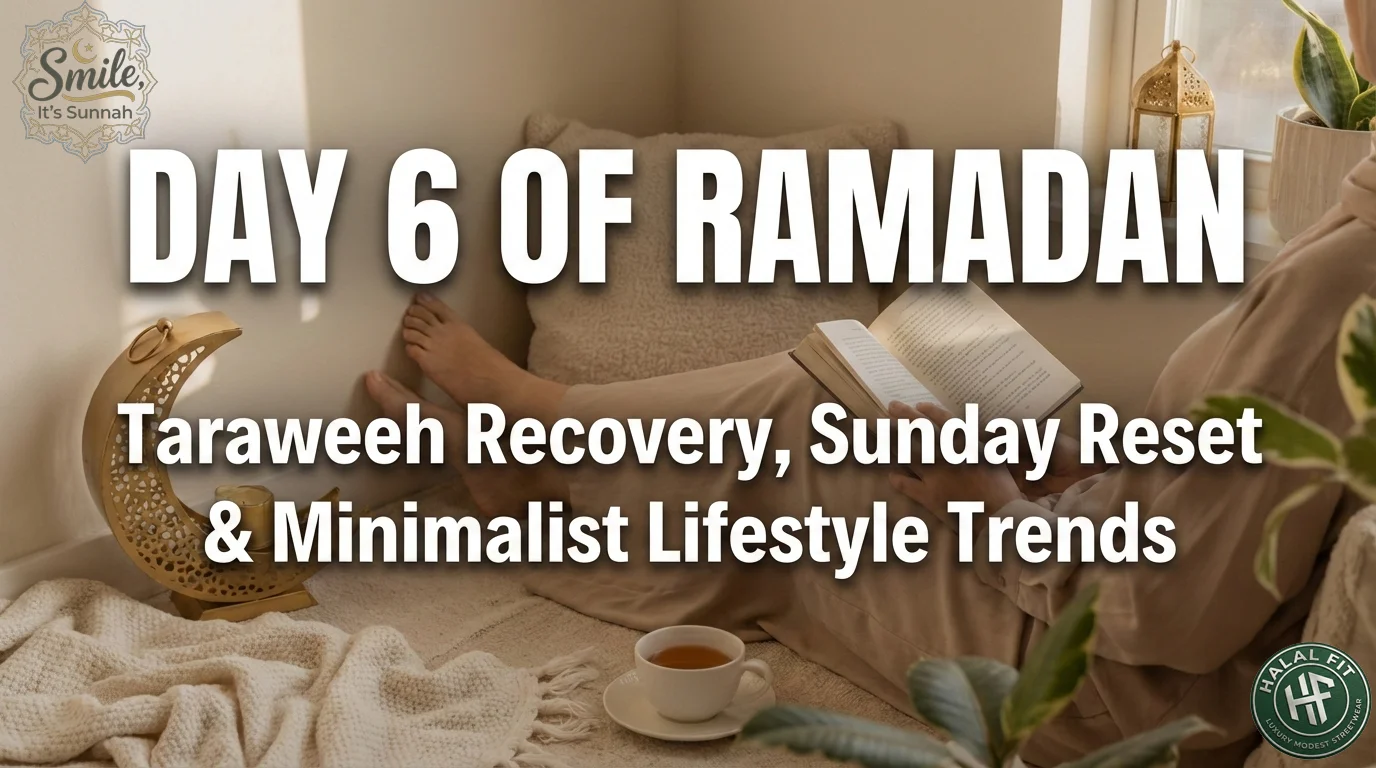
Taraweeh Recovery, Sunday Reset & Minimalist Lifestyle Trends
Published: February 22, 2026
Category: Ramadan 2026 Guide / Lifestyle & Wellness
Introduction: The First Ramadan Weekend in Canada
Day 6 of Ramadan 2026 falls on Sunday, February 22—marking the first complete weekend of the holy month for Canadian Muslims. By this point in the fasting journey, the initial shock of the fast has subsided. Energy levels are stabilizing, the body is adapting to the unique demands of a winter fast, and the rhythm of Taraweeh prayers is becoming routine. Because Ramadan 2026 began on February 18 in Canada, Muslims across the country are navigating approximately 12.5 to 13 hours of fasting depending on their geographic location—a strategic advantage compared to summer Ramadans .
This winter Ramadan window creates a unique opportunity: better recovery, stronger Taraweeh performance, and more intentional planning before Week 2 begins. If you're searching for Ramadan 2026 Canada timings, Taraweeh recovery tips, minimalist Ramadan trends, or Sunday reset strategies during fasting, this comprehensive guide addresses each dimension of Day 6 wellness.
Taraweeh Mobility in Ramadan 2026—Prevent Stiffness and Protect Your Joints
Taraweeh in Ramadan 2026 involves extended standing (Qiyam), repeated bowing (Ruku), and consistent prostration (Sujood). Across Canadian mosques, nightly prayers often exceed one hour of continuous physical engagement. Without proactive mobility work, physical stiffness compounds exponentially by the start of the second week, potentially compromising both prayer quality and overall wellness.
According to the World Health Organization, active recovery during Ramadan is not optional—it is performance maintenance for your worship . Light physical activity during fasting supports cardiovascular circulation, manages blood sugar levels, and maintains joint mobility without causing exhaustion .
The 10-Minute Taraweeh Recovery Protocol
Before Maghrib or 30 minutes after Iftar, implement this focused mobility reset:
|
Movement
|
Mechanism
|
Primary Benefit
|
|
Cat-Cow Spinal Flow
|
Controlled flexion and extension of the spine
|
Reduces lower back compression from prolonged standing during Qiyam
|
|
Ankle & Calf Mobility
|
Gentle dorsiflexion and plantarflexion stretches
|
Improves stability in Sujood and comfort during Tashahhud
|
|
Hip Opener Sequence
|
Deep lunges and Child's Pose variations
|
Relieves hip flexor tightness from desk work and extended prayer sessions
|
The British Islamic Medical Association emphasizes that Ramadan fitness in Canada is not about maximum strength gains—it is about durability for 30 nights of worship . Mobility work preserves prayer quality, protects joints from overuse injury, and sustains khushu' (spiritual focus) throughout the month.
The Rise of Minimalist Luxury and Earth-Tone Aesthetics
Search behavior across Ramadan 2026 reveals a significant cultural shift in Canada: minimalist Ramadan decor, earth-tone modest fashion, and sustainable Eid shopping are leading the trending keywords. The era of excess is fading, replaced by precision, restraint, and intentional consumption.
Fashion & Aesthetic Trends
In Ramadan fashion 2026, breathable premium fabrics and structured silhouettes are replacing heavy embellishment and excessive ornamentation. Trending color palettes—including sage green, terracotta, camel, dusty rose, and warm neutrals—are defining the Iftar aesthetic across Canadian Muslim communities . These earth tones photograph better on social media, create a calmer visual environment, and align with the understated elegance many Canadian Muslims are gravitating toward.
Sustainable Ramadan Practices
Minimalist luxury extends beyond fashion into hosting and consumption patterns. Instead of impulse buying, families are investing in fewer, higher-quality essentials for their Iftar tables. Sustainable Ramadan practices—such as reducing food waste, using reusable tableware, and practicing intentional gifting—are becoming central to the modern halal lifestyle conversation in Canada . This shift reflects a broader recognition that Ramadan is a month of spiritual refinement, not material accumulation.
The Ramadan Sunday Reset—Preparing for Week 2 with Strategic Planning
Day 6 falling on a Sunday makes it the strategic reset point of Ramadan 2026. To avoid the "mid-month slump" that many fasters experience, use today to optimize your physical environment, nutrition strategy, and spiritual intentions.
1. Metabolic Resilience and Nutrition Strategy
Nutrition in 2026 has evolved beyond simple calorie counting. Experts now advocate for a systems-based approach to metabolic resilience—focusing on sustained energy release, gut health, and nutrient density . For your Sunday meal preparation and the week ahead, prioritize:
Complex Carbohydrate Bowls: Steel-cut oats, quinoa, or barley provide sustained energy release throughout the fasting period . These whole grains stabilize blood sugar and prevent the energy crashes that often occur mid-fast.
Probiotic Support: Greek yogurt, kefir, or fermented foods maintain gut health during the fasting window . A healthy microbiome supports immune function and reduces digestive distress during Ramadan.
Strategic Hydration: Athletes and active fasters should avoid excessive caffeine and focus on continuous hydration between Iftar and Suhoor . The Canadian winter's dry climate compounds dehydration risk, making deliberate water intake essential.
2. Mental Wellness and Spiritual Focus
As the initial excitement of the first few days settles into routine, maintaining mental clarity and spiritual depth becomes paramount. The Nisa Foundation emphasizes that Ramadan is a time for providing support, healing, and community connection . Set a renewed Niyyah (intention) for Week 2—focusing on physical resilience, spiritual depth, and intentional community engagement.
Research from UC Riverside indicates that mild ketosis during fasting can actually improve alertness and cognitive performance—a phenomenon many Canadian Muslims report experiencing by Day 5 . Leverage this mental clarity for deeper Quranic reflection and meaningful Duas.
3. Logistical Organization for Week 2
Review your local Ramadan 2026 Sehri and Iftar times for the coming week. In Canada, Suhoor will gradually move earlier while sunset extends slightly. Organize your prayer garments and plan your Taraweeh attendance for consistency. This logistical preparation now protects your energy for the next six days.
The Minimalist Ramadan Hosting Guide
As the first weekend approaches, many Canadian Muslims are hosting family Iftar gatherings. The minimalist aesthetic trending in 2026 offers a refreshing alternative to traditional excess.
Hosting Principles
Quality Over Quantity: Serve fewer dishes prepared with premium ingredients rather than an overwhelming spread. A carefully curated menu demonstrates respect for guests and reduces food waste.
Intentional Table Setting: Use earth-tone linens, simple centerpieces, and reusable serving ware. The visual calm created by minimalist aesthetics enhances the spiritual atmosphere of Iftar.
Sustainable Practices: Compost food scraps, use reusable plates and utensils, and plan portions to minimize waste. These practices align with Islamic teachings on stewardship and mindful consumption.
Digital Wellness and Screen Time Management
By Day 6, many Canadian Muslims report increased temptation to "doomscroll" during late-night hours after Taraweeh. The National News highlights that Ramadan is the perfect time to transition from digital distraction to spiritual discipline .
Implement these digital wellness practices:
•Batch Notifications: Check social media and messaging apps only once per hour, not continuously.
•Analog Alternatives: Replace screen time with Quran reading, journaling, or conversation.
•Sleep Hygiene: Reduce blue light exposure 30 minutes before sleep to support the nocturnal sleep schedule many fasters adopt.
Physical Activity and Exercise During Ramadan 2026
Contrary to common misconceptions, light physical activity during Ramadan supports overall wellness. The Canadian Sport Institute Manitoba recommends light exercise like brisk walking, gentle jogging, and low-intensity aerobic activities . These activities should occur after Iftar when energy levels are highest.
Post-Iftar Timing: The optimal window for physical activity is 1-2 hours after breaking the fast, when the body has absorbed nutrients and hydration.
Intensity Guidelines: Avoid high-intensity interval training (HIIT) or heavy strength training during fasting. Instead, focus on mobility, flexibility, and cardiovascular maintenance.
Summary Table: Day 6 Strategic Focus Areas
|
Category
|
Strategic Action
|
Expected Outcome
|
|
Physical Wellness
|
10-Minute Mobility Reset
|
Prevent Taraweeh stiffness and joint pain
|
|
Lifestyle Aesthetics
|
Minimalist Hosting Approach
|
Create calm, intentional Iftar environment
|
|
Nutrition
|
Complex Carbs + Probiotics
|
Sustained energy and gut health for Week 2
|
|
Mental Health
|
Renewed Niyyah & Digital Detox
|
Deeper spiritual focus and mental clarity
|
|
Community
|
Authentic Ramadan Mubarak Messages
|
Strengthen family and community bonds
|
Conclusion: Balance as the Theme of Day 6
As we close Day 6 of Ramadan 2026 in Canada, the overarching theme is balance. Protect the body through mobility and intentional movement. Refine your aesthetic through minimalist choices that reflect spiritual values. Strengthen community connections through authentic engagement. Prepare intentionally for the week ahead through strategic nutrition and logistical organization.
For exact Ramadan 2026 fasting times in your city, always verify with your local mosque or trusted Islamic authority, as Canadian timings vary significantly coast to coast.
How are you spending your first Ramadan weekend? Are you focusing on Taraweeh recovery, minimalist Ramadan hosting, or preparing for a strong Week 2?
References



Extended FAQ
Based on trending searches from Google Trends, Reddit discussions, and social media conversations, here are the 20 most common questions Canadian Muslims are asking about Day 6 of Ramadan 2026, Taraweeh recovery, Sunday reset, and minimalist Ramadan practices.
Physical Wellness & Taraweeh Recovery
Q1: Why does my back hurt so much after Taraweeh prayers?
A: Back pain during Taraweeh is one of the most common complaints by Day 6 of Ramadan. Extended standing in one position for over an hour overloads your lower back muscles, especially if you have desk-based work during the day. The combination of prolonged standing, repeated bowing (Ruku), and the physical demands of Sujood creates cumulative strain. Additionally, dehydration during fasting can reduce muscle elasticity and increase stiffness. The solution is proactive mobility work: implement the 10-minute Cat-Cow spinal decompression sequence before Maghrib or after Iftar to reduce compression and improve flexibility. If pain persists beyond Day 6, consider consulting a physiotherapist who understands Islamic prayer positions.
Q2: How can I prevent knee and ankle pain during long Taraweeh sessions?
A: Knee and ankle pain typically results from repetitive stress during Sujood and the constant weight-bearing during Qiyam. To prevent this, perform targeted ankle mobility work: gentle dorsiflexion and plantarflexion stretches, and calf raises to strengthen stabilizer muscles. For knees, incorporate quad strengthening exercises and hip opener sequences. Wear supportive footwear during Taraweeh if your mosque permits it. Ensure you're properly hydrated between Iftar and Suhoor, as dehydration exacerbates joint pain. If you experience severe pain, it's permissible in Islam to use a chair during prayer—prioritize your health and long-term ability to worship.
Q3: Is it normal to feel more sore on Day 6 than on earlier days of Ramadan?
A: Yes, this is completely normal. By Day 6, the cumulative effect of five nights of Taraweeh has fatigued your muscles and connective tissues. Additionally, your body's inflammatory response may peak around this time as it adapts to the new physical demands. This is actually a sign that your body is adjusting—soreness typically decreases after Day 6 as your muscles adapt. To manage this, increase your mobility work, ensure adequate protein intake at Iftar and Suhoor, and consider light stretching or walking after Iftar to promote blood flow and recovery.
Q4: What's the best time to do mobility exercises during Ramadan?
A: The optimal time for mobility work is 30 minutes after Iftar, when your body has absorbed some nutrients and hydration. At this point, your muscles are warm and more receptive to stretching. Avoid intense exercise during fasting hours, as this depletes energy and can cause dizziness. Post-Iftar mobility sessions (10-15 minutes) are ideal because they prepare your body for Taraweeh and promote recovery. Alternatively, perform light stretching before Maghrib if you prefer a pre-prayer routine. Never do strenuous exercise immediately after Iftar—wait at least 1-2 hours for digestion.
Q5: Can I take pain relief medication during Ramadan fasting?
A: Yes, you can take pain relief medication during fasting. Most scholars agree that oral medications do not break the fast if they are taken for medical necessity. However, if the medication requires food for proper absorption, consult your pharmacist or a medical professional. Topical creams, patches, and heat therapy are also permissible and don't affect your fast. That said, focus first on preventive measures like mobility work and hydration before resorting to medication. If pain is severe, consult a healthcare provider—your health is a priority in Islam.
Nutrition & Metabolic Resilience
Q6: What are the best foods to eat at Suhoor for sustained energy?
A: The ideal Suhoor meal combines three components: complex carbohydrates, high-quality protein, and healthy fats. Complex carbs like steel-cut oats, whole grain bread, barley, or quinoa release energy slowly and keep you fuller longer. Protein sources such as eggs, Greek yogurt, cottage cheese, or lentils provide satiety and muscle support. Healthy fats from avocado, nuts, seeds, or olive oil improve nutrient absorption and provide sustained energy. A practical Suhoor example: overnight oats with Greek yogurt, berries, almonds, and a drizzle of honey. This combination stabilizes blood sugar and prevents the mid-fast energy crash many experience by Day 6.
Q7: How much water should I drink between Iftar and Suhoor?
A: The general recommendation is 2.7 to 3.7 liters of water daily for adults (women and men respectively), but during Ramadan, you must consume all of this between Iftar and Suhoor—roughly 8-12 cups. However, avoid drinking all your water at once; instead, distribute it throughout the evening. A practical approach: drink 1-2 cups immediately after Iftar, another 2-3 cups during the evening, and 1-2 cups before Suhoor. Lukewarm water is absorbed more efficiently than cold water. In Canada's dry winter climate, dehydration risk is higher, so prioritize consistent water intake. If you have kidney or heart conditions, consult your doctor about appropriate hydration levels.
Q8: What's the difference between "metabolic resilience" and regular Ramadan nutrition?
A: Metabolic resilience refers to your body's ability to efficiently manage energy, blood sugar, and nutrient absorption during fasting. Traditional Ramadan nutrition focuses on calories; metabolic resilience focuses on nutrient density, gut health, and sustained energy release. A metabolic resilience approach prioritizes: complex carbohydrates over simple sugars, fermented foods for gut health, adequate protein for muscle preservation, and healthy fats for hormone balance. This systems-based approach prevents the energy crashes, digestive issues, and fatigue many experience by mid-Ramadan. By Day 6, if you've been eating nutrient-dense meals, you'll notice improved mental clarity, sustained energy, and better digestion compared to a high-sugar diet.
Q9: Should I take probiotics or supplements during Ramadan?
A: Probiotics and certain supplements can support your fasting experience, but timing matters. Probiotics are best taken with food at Iftar, not on an empty stomach. Multivitamins, iron, and vitamin D can be taken at Iftar with a meal for optimal absorption. Avoid taking supplements on an empty stomach during fasting, as this can cause nausea. If you're concerned about nutritional gaps, focus first on eating whole foods—dates, nuts, yogurt, leafy greens, and legumes provide natural probiotics and nutrients. Consult a healthcare provider before starting new supplements, especially if you're on medications.
Q10: Is it okay to eat large meals at Iftar or should I eat smaller portions?
A: Moderation is key. Eating excessively large meals at Iftar causes digestive stress, bloating, and energy crashes. Instead, follow the Sunnah approach: break your fast with dates and water, then eat a balanced meal 15-20 minutes later. This allows your digestive system to gradually activate. A practical Iftar structure: dates and water, a light soup or salad, a protein-based main dish, and whole grains. Avoid fried foods, excessive sugar, and heavy desserts, which strain digestion and cause inflammation. By eating moderately at Iftar, you'll feel more energized for Taraweeh and experience better sleep quality afterward.
Sunday Reset & Week 2 Preparation
Q11: How do I avoid the "mid-Ramadan slump" that many people experience?
A: The mid-Ramadan slump occurs around Day 10-15 when initial excitement fades and fatigue accumulates. To prevent this, use Day 6 (Sunday) as a strategic reset: review your Ramadan goals and adjust them if needed, diversify your worship practices to maintain engagement, ensure adequate sleep and nutrition, and set a renewed Niyyah (intention) for Week 2. Vary your spiritual routine by incorporating different acts of worship—Quranic reflection, Dhikr, Sadaqah, or seeking knowledge. Physically, prioritize sleep and hydration. Mentally, connect with community and remind yourself of Ramadan's purpose. By preparing now, you'll maintain momentum through the entire month.
Q12: What should I plan on Sunday to prepare for Week 2?
A: Your Sunday reset should include four components: (1) Logistical: Review Sehri and Iftar times for the coming week, organize prayer garments, plan Taraweeh attendance. (2) Nutritional: Meal prep key ingredients for the week, plan balanced Suhoor and Iftar menus. (3) Spiritual: Set specific Quranic reading goals, list duas you want to focus on, plan which nights you'll attend Taraweeh. (4) Physical: Schedule mobility work, plan light exercise after Iftar, ensure sleep schedule is optimized. Spending 30-45 minutes on Sunday planning prevents daily stress and protects your energy for Week 2.
Q13: How do I maintain motivation and spiritual focus by Day 6?
A: By Day 6, the initial excitement has faded, and routine has set in. To maintain motivation: (1) Reflect on your progress—you've completed one-fifth of Ramadan. (2) Connect with community through Taraweeh, Iftar gatherings, or online discussions. (3) Vary your worship to prevent monotony—try different Quran recitation methods, explore new duas, or listen to Islamic lectures. (4) Set micro-goals for Week 2 rather than focusing on the entire month ahead. (5) Remember your Niyyah—why you're fasting. Spiritual motivation comes from connecting your actions to deeper purpose, not just routine compliance.
Minimalist Ramadan & Sustainable Practices
Q14: What does "minimalist Ramadan" actually mean, and why is it trending in 2026?
A: Minimalist Ramadan prioritizes intentionality over excess. Instead of elaborate decorations, multiple dishes, and constant consumption, it focuses on quality over quantity, meaningful experiences over material accumulation, and spiritual depth over social performance. This trend reflects a broader shift toward mindful consumption and environmental consciousness. In practice, minimalist Ramadan means: fewer but higher-quality decorations, simpler Iftar menus with premium ingredients, reusable tableware instead of disposables, and intentional community gatherings rather than large, chaotic events. This approach aligns with Islamic teachings on stewardship and reduces stress, waste, and financial burden—making Ramadan more spiritually fulfilling.
Q15: How can I host a minimalist Iftar that's still welcoming and abundant?
A: Minimalist hosting doesn't mean sparse or unwelcoming—it means intentional abundance. Focus on: (1) Quality Ingredients: Serve fewer dishes prepared with premium, locally-sourced ingredients rather than many mediocre dishes. (2) Aesthetic Simplicity: Use earth-tone linens, simple centerpieces, and wooden or ceramic serving ware instead of plastic. (3) Meaningful Portions: Prepare appropriate quantities to minimize waste; guests appreciate thoughtful portions over excess. (4) Community Focus: Create space for conversation and connection rather than rushing through a large spread. A minimalist Iftar example: dates and water, a nourishing soup, one main protein dish, fresh salad, whole grain bread, and herbal tea. This is abundant, satisfying, and intentional—guests feel welcomed without being overwhelmed.
Q16: What are the best earth-tone colors for Ramadan 2026 decor?
A: The trending earth-tone palette for Ramadan 2026 includes: sage green (calming, natural), terracotta (warm, grounding), camel (elegant, neutral), dusty rose (soft, sophisticated), warm cream (timeless), and charcoal (depth). These colors create a calm, intentional aesthetic that photographs well and reflects the understated elegance trending in 2026. Incorporate these through: linens, cushions, wall hangings, and natural elements like wood and plants. Avoid bright neons, heavy golds, and excessive ornamentation. The goal is an environment that feels peaceful and spiritually conducive, not visually overwhelming.
Q17: How do I reduce food waste during Ramadan?
A: Food waste during Ramadan is a significant issue. To minimize it: (1) Plan Portions: Calculate guest numbers accurately and prepare accordingly. (2) Compost Scraps: Set up a compost bin for vegetable peels and organic waste. (3) Donate Leftovers: Partner with local shelters or food banks to donate excess food. (4) Freeze Extras: Prepare components in advance and freeze them for later use. (5) Encourage Guests to Take Leftovers: Provide reusable containers for guests to take home uneaten food. (6) Prioritize Whole Foods: Serve dishes that use entire ingredients (e.g., whole grains, legumes) rather than processed foods with packaging waste. This aligns with Islamic teachings on Israf (wastefulness) and demonstrates environmental stewardship.
Q18: What's trending in Ramadan fashion for 2026?
A: Ramadan fashion 2026 emphasizes minimalist luxury and earth-tone aesthetics. Trending elements include: breathable premium fabrics (linen, silk blends), structured silhouettes without heavy embellishment, earth-tone color palettes (sage, terracotta, camel, dusty rose), and modest yet elegant designs. Avoid fast fashion and excessive ornamentation. Invest in fewer, higher-quality pieces that can be mixed and matched. Sustainable fashion is also trending—look for ethically-made, eco-friendly brands. The overall aesthetic is refined, intentional, and spiritually aligned—fashion that reflects inner values rather than external status.
Community & Spiritual Connection
Q19: What's an authentic way to say "Ramadan Mubarak" that goes beyond generic messages?
A: Generic "Ramadan Mubarak" messages feel impersonal. To make it authentic: (1) Personalize: Reference something specific about the person—their spiritual goals, their role in the community, or a shared memory. (2) Be Sincere: Express genuine wishes for their spiritual growth, not just holiday pleasantries. (3) Add Context: Mention a specific aspect of Ramadan—"May your Taraweeh be filled with khushu'" or "May your Duas be accepted." (4) Use Authentic Language: Combine Arabic and English naturally: "Wishing you strength at Suhoor and ease at Iftar. Ramadan Kareem." (5) Show Action: Accompany your message with a gesture—sharing a meal, checking in on their wellbeing, or offering practical support. Authentic connection comes from genuine care, not performative messaging.
Q20: How do I balance digital engagement with digital detox during Ramadan?
A: This is the central tension of Ramadan 2026: staying connected while detoxing from screens. The solution is intentional balance: (1) Batch Social Media: Check platforms once or twice daily at set times, not continuously. (2) Protect Screen-Free Hours: Keep the hour before Fajr and the hour after Iftar screen-free. (3) Use Islamic Apps Mindfully: Quran apps and Islamic learning tools are beneficial, but set time limits. (4) Replace Doomscrolling: When tempted to scroll, read Quran, journal, or have conversations instead. (5) Communicate Boundaries: Let friends know you're doing a digital detox so they don't expect immediate responses. (6) Engage Intentionally: If you use social media, engage with meaningful content—Islamic knowledge, community updates, or authentic conversations—not mindless entertainment. The goal is using technology as a tool for spiritual growth, not as an escape from the fast.
Additional Resources & Support
Quick Reference: Day 6 Action Items
|
Category
|
Action
|
Timing
|
|
Physical
|
Perform 10-min mobility reset
|
30 min after Iftar
|
|
Nutrition
|
Prep Week 2 meal ingredients
|
Sunday afternoon
|
|
Spiritual
|
Set renewed Niyyah for Week 2
|
Before Maghrib
|
|
Logistical
|
Review Sehri/Iftar times for week
|
Sunday morning
|
|
Community
|
Send authentic Ramadan messages
|
Anytime Sunday
|
|
Digital
|
Plan screen-free hours for week
|
Sunday evening
|
When to Seek Professional Help
If you experience any of the following by Day 6, consider consulting a healthcare provider:
•Persistent back or joint pain that doesn't improve with stretching
•Severe dehydration symptoms: dizziness, extreme fatigue, headaches
•Digestive issues: persistent bloating, constipation, or diarrhea
•Mental health concerns: anxiety, depression, or overwhelming stress
•Sleep disruption: inability to fall asleep despite fatigue
•Medication concerns: uncertainty about taking medications during fasting
Remember: Islam prioritizes health and wellbeing. Seeking professional support is not a sign of weakness—it's an act of self-care aligned with Islamic teachings.
Final Thoughts
Day 6 of Ramadan 2026 is a pivotal moment. You've established a rhythm, your body is adapting, and you're positioned to either maintain momentum or experience the mid-month slump. By implementing the strategies in this FAQ—prioritizing physical recovery, optimizing nutrition, planning strategically, embracing minimalist practices, and nurturing community—you'll enter Week 2 with renewed energy, clarity, and spiritual depth.
Remember: Ramadan is not about perfection; it's about intention, growth, and connection. Use Day 6 as your reset point, and approach Week 2 with the same mindfulness and purpose you brought to Day 1.
Ramadan Kareem. May your fast be accepted, your efforts be rewarded, and your heart be purified.